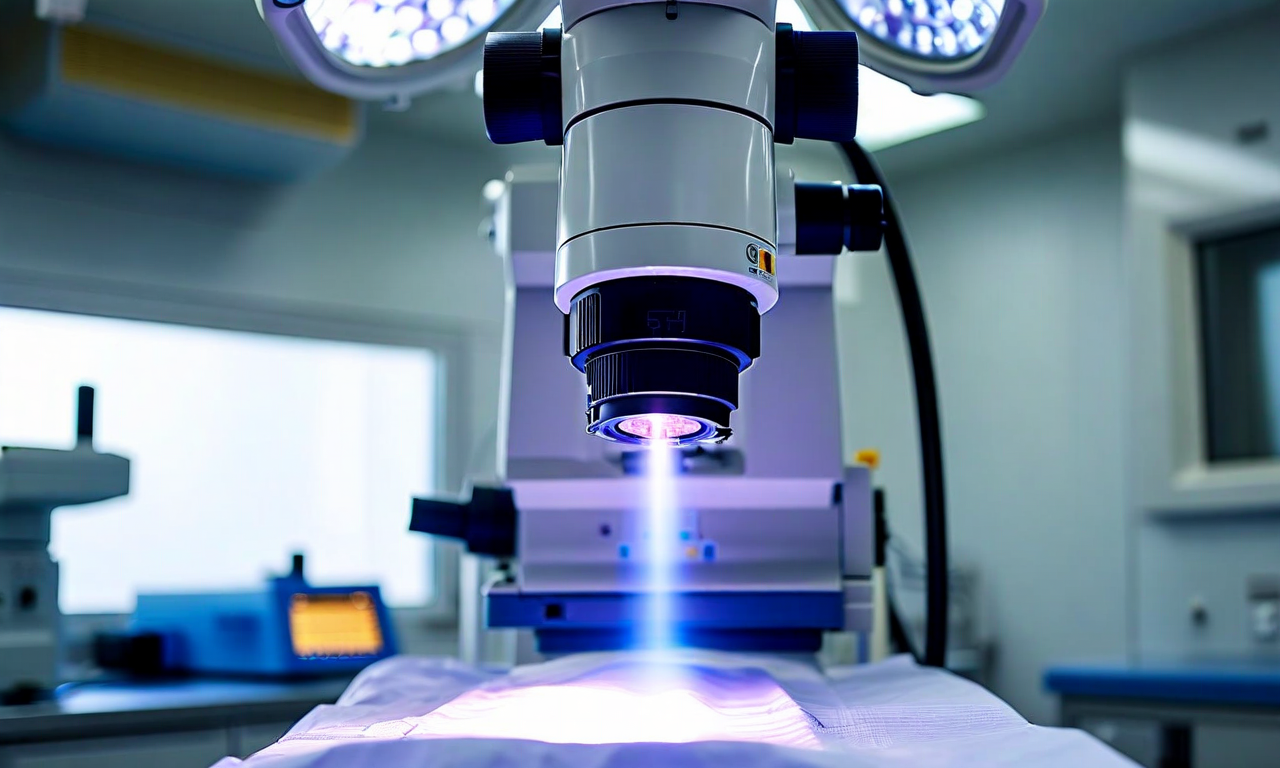
Photonics technology has been transforming medicine for decades — from the laser surgery systems that have corrected millions of cases of myopia to the optical coherence tomography (OCT) machines that allow ophthalmologists to diagnose retinal diseases before they cause vision loss. As integrated photonics advances, enabling optical systems to be miniaturized onto chips smaller than a fingernail, the applications in medicine are rapidly expanding from specialized hospital equipment to point-of-care diagnostic devices and even implantable biosensors.
Optical Coherence Tomography
OCT is arguably the most transformative photonics technology in medical imaging. Using the principle of low-coherence interferometry — measuring the echo delay and intensity of light reflected from tissue structures — OCT produces cross-sectional images of tissue at micrometer resolution, comparable to histology but without requiring tissue excision or preparation. A modern OCT system can acquire volumetric images of the retina in seconds, detecting subtle structural changes associated with macular degeneration, diabetic retinopathy, and glaucoma years before they would be visible with conventional ophthalmoscopy.
OCT has now extended beyond ophthalmology into cardiology (intravascular OCT for coronary artery imaging), gastroenterology (OCT colonoscopy for early cancer detection), and oncology (OCT-guided tumor margin assessment during surgery). Each new application has driven demand for OCT systems with higher imaging speed, deeper penetration, and enhanced contrast mechanisms.
The integration of OCT systems on photonic chips is enabling a new generation of miniaturized OCT devices. A full OCT imaging engine — light source, beam splitter, reference delay, and detector — can be implemented on a chip smaller than a postage stamp using silicon photonics or silicon nitride integration. This miniaturization enables OCT catheters small enough to navigate coronary arteries, handheld OCT devices for point-of-care retinal screening in resource-limited settings, and disposable OCT probes that eliminate the sterilization burden of reusable instruments.
Laser Surgery and Phototherapy
Laser surgery encompasses a broad range of medical procedures that use precisely controlled laser energy to cut, coagulate, ablate, or otherwise modify tissue. LASIK and PRK refractive surgery uses ultrashort-pulse lasers to reshape the cornea with submicron precision. Photodynamic therapy (PDT) uses laser activation of photosensitizer compounds to generate reactive oxygen species that selectively destroy tumor cells. Laser lithotripsy breaks up kidney stones with pulsed laser energy delivered through fiber optic catheters. Low-level laser therapy (LLLT) uses near-infrared laser energy to modulate cellular metabolism for wound healing and pain management.
The key enabling technology across these applications is the ability to control laser parameters — wavelength, pulse duration, pulse energy, beam profile — with extreme precision. Integrated photonic systems can provide this control more reproducibly and at lower cost than conventional bulk optical systems, opening opportunities for more sophisticated treatment protocols that adapt in real time to tissue response signals measured by integrated sensors.
The real revolution in medical photonics is not just about better imaging or more precise surgery. It is about closing the loop — using optical measurements to guide treatment in real time, enabling personalized medicine at a level of precision that was previously impossible.
Biosensors and Diagnostics
Optical biosensors use the interaction between light and biological molecules to detect the presence and concentration of specific analytes — proteins, nucleic acids, small molecules, pathogens — in clinical samples. The surface plasmon resonance (SPR) biosensor, which detects binding events through changes in the refractive index near a metal surface, has been a workhorse of research biosensing for three decades. Photonic ring resonator sensors offer higher sensitivity and greater multiplexing capability than SPR, making them attractive for clinical diagnostic applications.
The COVID-19 pandemic demonstrated both the value and the limitations of point-of-care diagnostics. Lateral flow assays provided rapid, inexpensive testing at the cost of limited sensitivity and specificity. Integrated photonic biosensors promise to combine the convenience of lateral flow assays with sensitivity approaching laboratory PCR, in a compact handheld form factor that could be manufactured at low cost. Several companies are developing lab-on-chip photonic diagnostics targeting infectious disease, cardiac biomarkers, and cancer screening applications.
Neural Interfaces and Optogenetics
One of the most exciting frontiers in medical photonics is the intersection with neuroscience. Optogenetics — the use of light-sensitive proteins (opsins) to control the activity of specific neurons with millisecond precision — has revolutionized basic neuroscience research since its development in the early 2000s. More recently, researchers are developing clinical applications: using photostimulation of retinal cells to partially restore vision in patients with retinal degeneration, and developing photostimulation-based treatments for neurological conditions including Parkinson's disease and depression.
Delivering light precisely to targeted neurons in brain tissue at depth requires integrated photonic neural probes — thin, flexible optical fiber arrays or integrated photonic chip probes that can be implanted with minimal tissue damage. Silicon photonics enables the fabrication of neural probes with many independent optical channels — each capable of addressing a different brain region — at the scale and cost needed for clinical translation. Several research groups and startups are developing these technologies, with potential applications in seizure detection and suppression, chronic pain management, and brain-computer interfaces.
The Regulatory and Commercial Path
Medical device development operates under regulatory frameworks — FDA in the United States, CE marking in Europe, and equivalent systems globally — that add significant time and cost to the commercialization path. A new photonic diagnostic device classified as Class II in the United States typically requires a 510(k) substantial equivalence submission, a process that takes one to two years and costs several million dollars. Implantable devices are Class III and require full PMA approval, a much more demanding process. Photonics companies targeting medical applications need to build regulatory expertise into their development plans from the earliest stages, designing products with regulatory requirements in mind and allocating sufficient resources for clinical validation studies.