Our Mission
We exist to make photonics technology commercially viable at scale. By developing manufacturable photonic integrated circuits, we are bridging the gap between laboratory breakthroughs and real-world deployment in data centers, autonomous vehicles, and quantum systems.
Our Vision
A future where light — not electrons — carries the bulk of the world's information. Photonic systems offer unmatched bandwidth, minimal latency, and dramatically lower energy consumption, making them essential for the AI era and beyond.
Our Approach
We combine deep academic expertise with an engineering-first mindset. Our team of photonics researchers, chip designers, and systems engineers collaborate closely to deliver integrated solutions that work in real deployments, not just in research papers.
Founded on a Breakthrough
Wove Photonic was founded in 2022 by researchers who spent over a decade advancing photonic integration at leading research institutions. The company emerged from a fundamental insight: that existing photonic platforms were too lossy, too fragile, and too expensive to manufacture at the scale required for commercial deployment.
Our founders developed a novel silicon-nitride on insulator (SiN-OI) platform that achieves propagation losses below 0.1 dB/cm across a broad wavelength range from 400 nm to 2350 nm. This allows us to build photonic circuits with performance characteristics that were previously unachievable outside of specialty research labs.
Since our founding, we have filed 14 patents, published 9 peer-reviewed papers, and built a team of 22 world-class engineers and scientists. In February 2025, we closed a $7.5 million Seed Round led by Deeptech Labs to accelerate our path to commercialization.
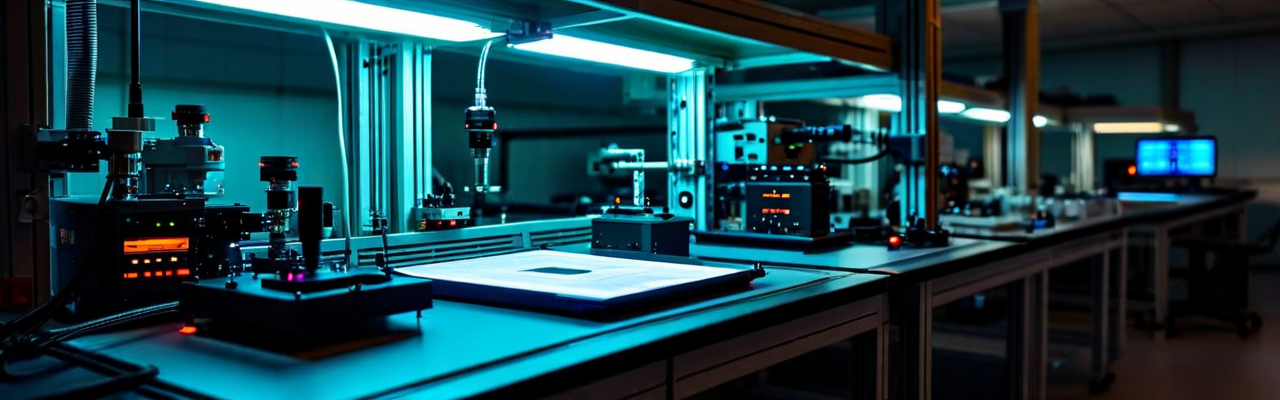

Photonic Integration
Our integration platform supports hundreds of optical components on a chip smaller than a fingernail, enabling system-on-chip photonics for the first time at production scale.

LiDAR & Sensing
Our solid-state LiDAR modules leverage optical phased array technology to deliver high-resolution 3D sensing without moving parts — enabling robust sensing for autonomous systems.
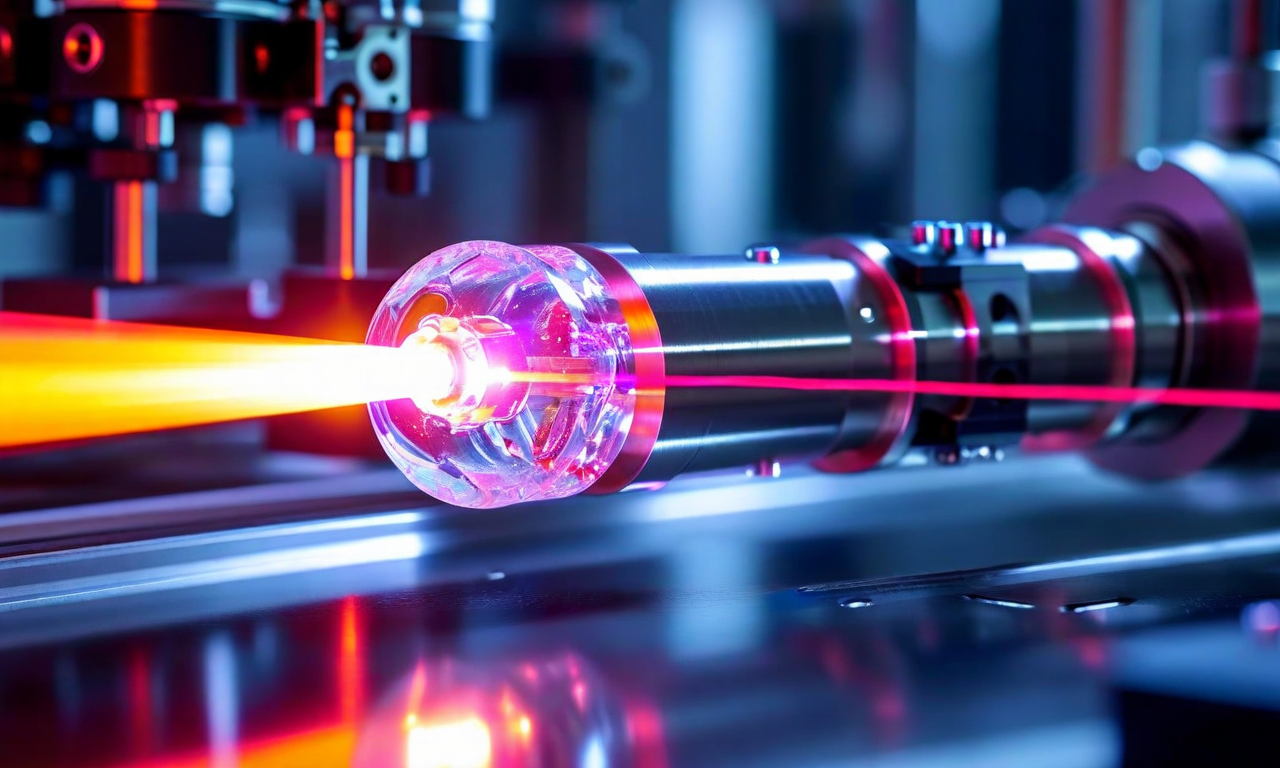
Quantum Photonics
We are developing integrated photonic platforms for quantum information processing, targeting boson sampling, quantum key distribution, and photonic qubit manipulation.
Research Areas
Our research spans several interconnected areas in applied photonics. Each program is led by a dedicated research team and backed by peer-reviewed science.
Silicon Nitride Photonic Platform
Our flagship platform enables ultra-low-loss photonic integration across a broad wavelength range. We are optimizing deposition processes, lithography techniques, and thermal annealing protocols to achieve consistent sub-0.1 dB/cm propagation losses at wafer scale. This work forms the foundation for all of our downstream application developments.
Optical Phased Arrays for LiDAR
We are developing large-aperture optical phased arrays with thousands of individual emitter elements, enabling beam steering without mechanical components. Our current prototypes achieve 120-degree field of view with 0.1-degree angular resolution at ranges exceeding 200 meters.
Photonic Computing Accelerators
Optical matrix-vector multiplication represents the core operation in neural network inference. Our photonic computing accelerators implement this operation in the optical domain, achieving throughput of tens of TOPS/W — far exceeding the efficiency of GPU and ASIC alternatives.
Integrated Quantum Photonics
We collaborate with quantum computing researchers to develop photonic integrated circuits that can generate, manipulate, and detect single photons with high efficiency. Our work focuses on integrated photon pair sources, linear optical quantum gates, and high-efficiency superconducting nanowire single-photon detectors.